
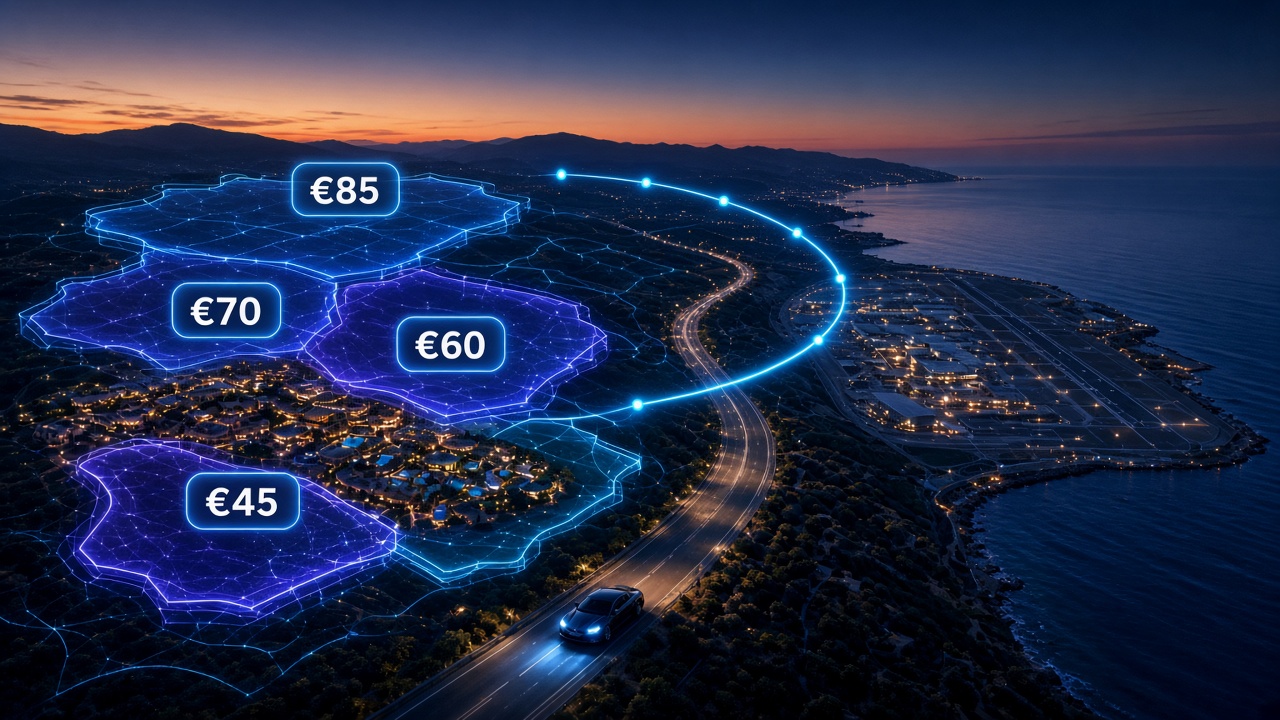
Zones or Per Kilometre? How to Price Transfers Without Losing Money
Most transfer companies lose margin in the pricelist, not on the road. Here is how to work out the true cost o...
Read MoreEvery day, hotel guests ask reception for a transfer, and the booking goes to whoever answers the phone first. A QR code at the desk turns that hotel into a sales point that works 24/7. Here is where to place the codes, what to put on the sign, and how to make it worth the hotel's while.
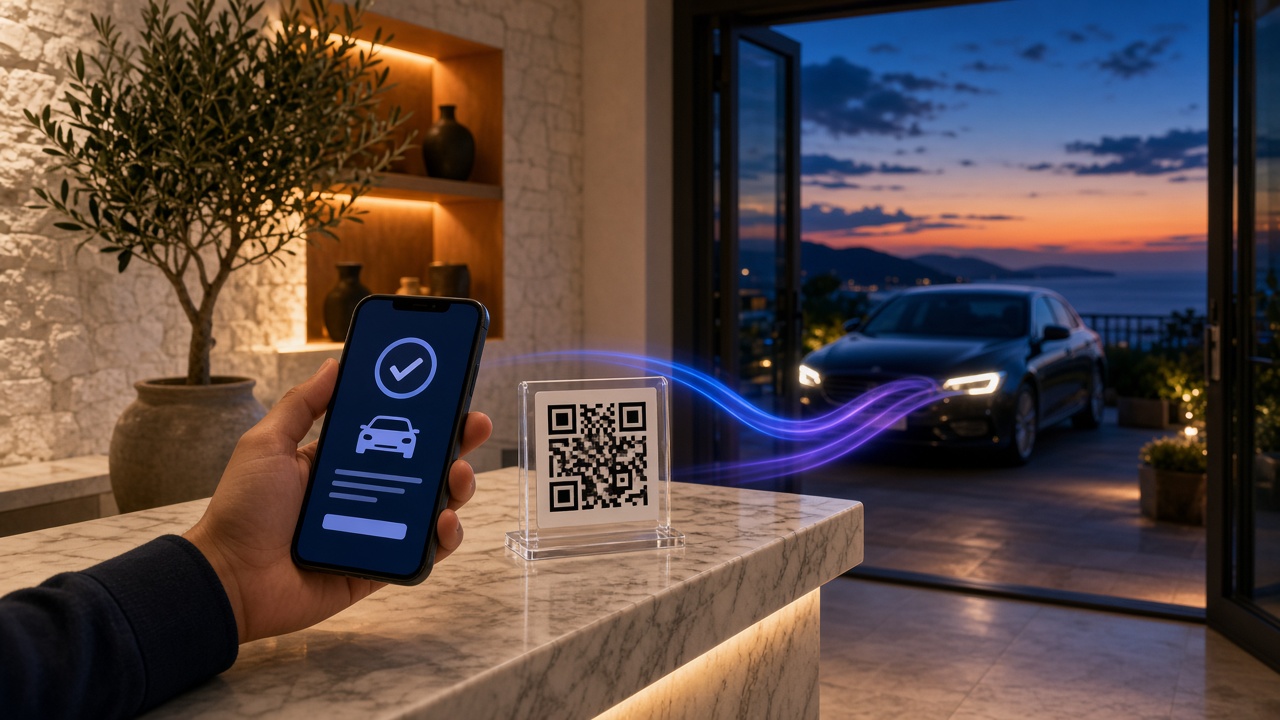
Every morning, at every hotel in your area, a guest walks up to reception and asks: "Can you get me a taxi to the airport?" What happens next decides who gets that booking. Sometimes the receptionist calls a cousin with a car. Sometimes the guest books through an app and a platform takes its cut. Very rarely does the booking go straight to a local transfer company. A QR code on the reception desk changes that. The hotel becomes a sales point that works 24 hours a day, and nobody has to pick up a phone.
Online travel agencies and transfer marketplaces bring you volume, but they keep a large share of every booking, often somewhere between 15% and 25%. They also own the customer. You get the job, but not the guest's loyalty, and not their next booking.
A direct booking is different in three ways:
Hotels are the obvious place to start, because the demand is already there. Guests arrive, leave, and want to visit places in between. The question is only who captures it.
The whole point of a QR code is that it removes steps. With WoW Services it looks like this:
Compare that with the usual route: a WhatsApp message with the wrong date, a phone call to confirm the flight, a name spelled three different ways. Every one of those steps is a chance for a mistake or a lost booking.
Reception is the obvious spot, but it is not the only one. Think about every moment when a guest is thinking about getting somewhere:
That last one is easy to overlook. A guest you drove from the airport will need to go back there. If your driver hands them a card at the hotel door, the return trip is yours before any competitor gets a chance.
A code on its own is just a black square. People scan when they understand, in two seconds, what they will get. A good sign has:
Before you leave a hotel, scan the code yourself with two different phones and complete a test booking. It takes two minutes and catches every problem before a guest finds it.
The hotel has no reason to put your sign on its desk unless it gains something. Usually that is three things:
The third point matters most. Hotels have heard "we will give you a commission" before, and then waited for a payment that never came, or came with a number nobody could check. When each hotel has its own QR code, every booking is linked to the hotel it came from. You can show them exactly what they earned, and they can see it is fair.
Decide in advance whether you pay a percentage or a fixed amount per booking, and check it against your real cost per trip. Our article on pricing transfers without losing money shows how to work that out.
Here is the same €60 airport transfer through three channels. The numbers are illustrative, so use your own rates.
| Channel | What you give away | You keep |
|---|---|---|
| Online marketplace | 20% commission (€12) | €48 |
| Hotel QR code | 10% to the hotel (€6) | €54 |
| Your own driver's card (return trip) | Nothing | €60 |
On one booking the difference looks small. Across a season, with a few hundred bookings per hotel, it is the difference between a thin margin and a healthy one. And unlike a marketplace, the hotel is actively sending guests your way.
The biggest mistake is printing one generic QR code and putting it everywhere. You then have no idea which hotel brings you work and which one put your sign in a drawer.
Give every location its own code: each hotel, each desk, each restaurant, even each driver. Then, after a month, you can answer the questions that matter:
An offline partnership you cannot measure is a favour. One you can measure is a sales channel. Put your time into the hotels that perform, and have an honest conversation with the ones that do not.
If you want to start this week:
A QR code costs almost nothing to print. Placed in the right spot, with the right sign and a fair deal for the hotel, it turns guests who would have gone to someone else into direct, paid bookings on your dashboard.
Create a unique QR code for each hotel, desk and driver. Guests book and pay on their phone, the booking lands on your dashboard, and commission is calculated automatically. Start your free trial of WoW Services today.
See how QR booking works Most transfer companies lose margin in the pricelist, not on the road. Here is how to work out the true cost o...
Read More
Discover how successful transfer companies are growing their operations and handling more bookings without exp...
Read More
Discover how to streamline your transfer and tour operations with a unified management platform. Learn best pr...
Read MoreJoin the transfer companies running their bookings, drivers and settlements on one platform.